
Authored by Mason Rashtian
Dedicated Personal Injury Lawyer in Santa Clarita, Valencia, Canyon Country, Newhall, Saugus, Stevenson Ranch, Castaic, Val Verde, Antelope Valley, Palmdale, Lancaster, the San Fernando Valley, and the Greater Los Angeles Area
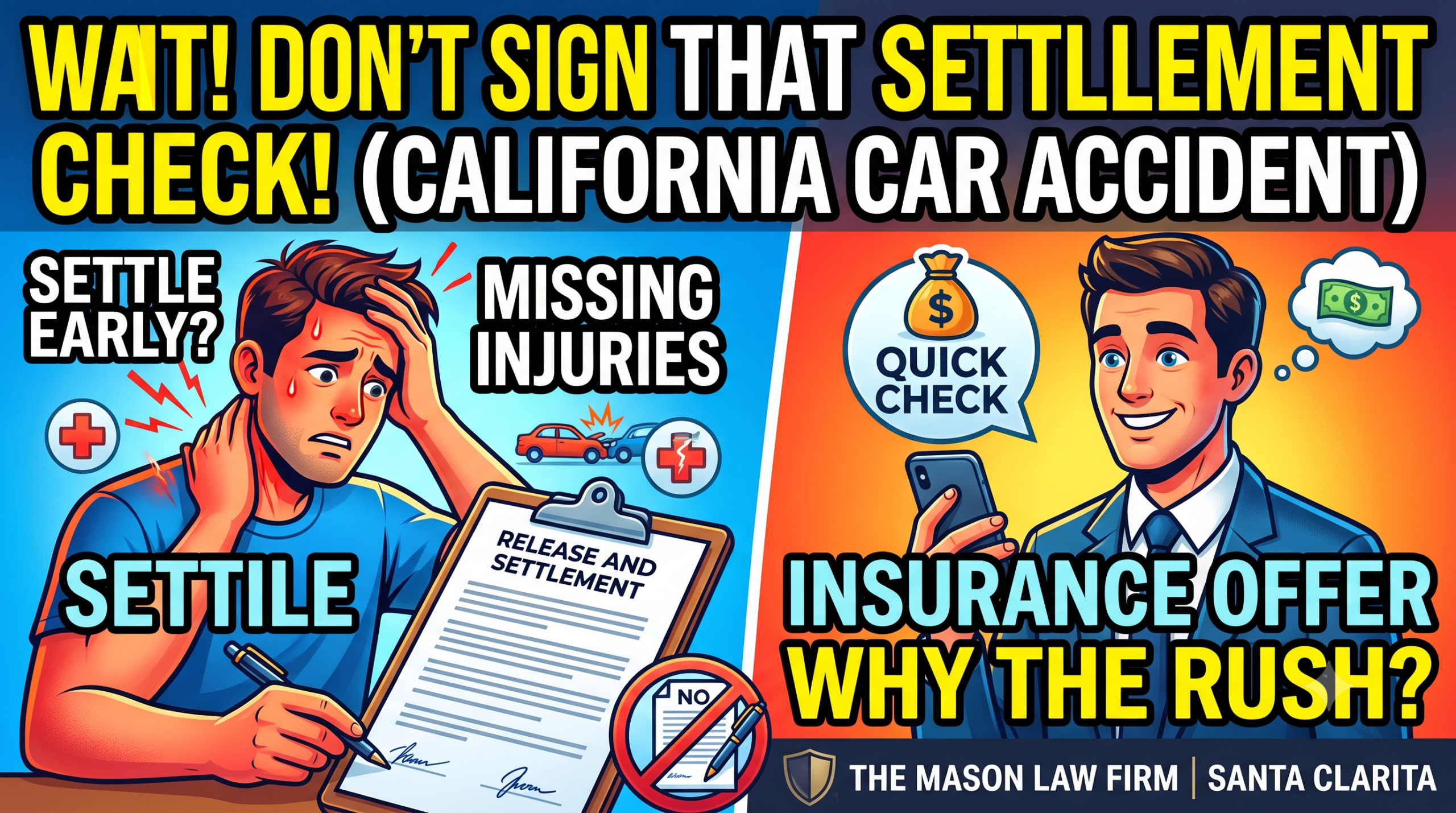
If you’ve been in a car accident and the insurance company keeps calling you with a friendly voice, offering you a quick check and ready to close things out, there’s a reason for that. It’s not because they’ve decided to take care of you. It’s because they’re hoping to settle your claim before you understand how serious your injuries actually are.
I’m Mason with The Mason Law Firm, and I want to walk through why this happens, the tactics insurance companies use, and what you should know before you sign anything after a California car accident.
Call The Mason Law Firm, managed by Santa Clarita Personal Injury Attorney Mason Rashtian, today at 661-506-2992 for a FREE consultation. We serve clients throughout Santa Clarita, Valencia, Newhall, Saugus, Canyon Country, Stevenson Ranch, Castaic, Val Verde and all of Los Angeles County.
Insurance Companies Are Businesses First
It’s easy to forget this in the moment, especially when the person on the phone sounds warm and reasonable. But insurance companies exist to protect their profits, not your recovery.
Every adjuster you speak with is, at the end of the day, evaluating your claim against a budget and a set of internal targets for how quickly and how cheaply it can be resolved. One of the best outcomes for them is getting an injured person to settle quickly before treatment is finished, before symptoms fully develop, and before the true value of the claim becomes clear.
A lot of people assume a fast offer means the insurance company is trying to help. In reality, it’s usually the opposite. A quick settlement is often designed to close the case cheaply, and that’s especially true in California, where the value of a claim can grow substantially as medical treatment continues and the long-term impact of an injury becomes apparent.
The longer a claim stays open, the more visibility everyone has into the real cost of the injury, such as lost wages, ongoing therapy, permanent limitations. Insurance companies know this, which is exactly why they’d rather you sign before that picture comes into focus.
This isn’t a coincidence or an occasional bad actor. It’s a business model. Adjusters are often evaluated internally on how efficiently they close files and how far below the claim’s potential value they’re able to settle.
That doesn’t mean every adjuster is acting in bad faith on a personal level. In fact, many are just doing their job within a system built to minimize payouts. But it does mean you shouldn’t mistake friendliness for fairness.
Why “I Feel Fine” Right After an Accident Doesn’t Mean You Are
One of the most common mistakes I see is people assuming they’re okay in the immediate aftermath of a crash. Adrenaline can mask pain for days, and some of the most serious injuries take time to show up, injuries including:
- Whiplash
- Herniated discs
- Concussions and traumatic brain injuries
- Nerve damage
- Anxiety or PTSD following the crash
I’ve represented clients who genuinely believed they were fine at the scene, only to discover weeks later that they needed injections, physical therapy, or even surgery.
If you settle before the full extent of your injuries becomes clear, you may be giving up your right to recover for any future medical treatment, and once you accept a settlement, there’s typically no going back.
Part of the reason these injuries take time to surface comes down to basic physiology. In the moments after a collision, your body releases a flood of adrenaline and other stress hormones designed to help you cope with an immediate threat.
That chemical response is very good at suppressing pain signals, which is why so many people walk away from a crash saying they feel “shaken up but okay.” It’s only once that adrenaline wears off, sometimes hours later, sometimes the next morning, that stiffness, swelling, and real pain start to set in. Soft-tissue injuries in particular, like whiplash, often don’t peak until 24 to 72 hours after the impact.
This is exactly why insurance companies move fast. If an adjuster can get you to describe your injuries, or accept an offer, during that early window, before the adrenaline fades and before you’ve even seen a doctor, they’re locking in a valuation based on incomplete information. That’s not an accident. It’s timing.
Common Tactics Insurance Adjusters Use
Adjusters are trained professionals, and their approach is rarely accidental. You should delay speaking with an adjuster until you seek advice from a personal injury attorney. Here are a few tactics to watch for:
Asking for a recorded statement.
It can feel casual, even friendly, but recorded statements are frequently used to lock in language that can later be used against you.
Minimizing your injuries.
Comments like “it sounds like you’re feeling better” or “this seems like a minor accident” often come well before your treatment is anywhere near complete. After an accident, never tell an adjuster that you feel fine!
Offering quick money.
When medical bills are stacking up, a fast check can be tempting. But early offers are typically far below what a case is actually worth.
Discouraging you from hiring an attorney.
You may hear “you don’t need a lawyer for this.” Keep in mind: the insurance company already has professionals working to protect its interests. You deserve the same.
Why a Settlement Is (Almost Always) Final
Here’s the part that catches many people off guard: when you accept a settlement, you typically sign a release, and that release usually closes your case permanently.
It doesn’t matter if your injuries get worse, if you end up needing surgery down the road, or if new medical issues surface later, once you’ve signed, you generally cannot go back and ask for more.
That’s precisely why it matters so much to understand the full scope of your injuries before you agree to settle anything.
Steps to Take After a California Car Accident
1. Get medical attention first.
Your health comes before anything else. Follow your doctor’s recommendations, and understand that gaps in treatment can hurt both your recovery and your claim.
2. Document everything.
Keep records of medical visits, symptoms, missed work, and how the injury is affecting your daily life.
3. Be careful talking to the insurance company
Avoid speaking with the adjuster from the adverse insurance company until you fully understand the extent of your injuries. However, should you speak with him or her, tell them that you will not discuss your injuries until you speak with an attorney.
4. Talk to an experienced personal injury attorney
The only way to protect yourself is to consult with an experienced Personal Injury attorney, and never sign any paperwork, especially any settlement documents until you do.
Seeing It From the Other Side
Before I represented injury victims, I spent years on the insurance defense side, defending drivers, bus drivers, businesses, contractors, grocery stores, and property owners.
That experience means I’ve seen firsthand how insurance companies evaluate and defend claims from the inside, and that perspective helps us anticipate their strategies and protect our clients throughout the process.
In 2006, I founded The Mason Law Firm to help injured people throughout Santa Clarita (Valencia, Newhall, Saugus, Canyon Country), it’s surrounding areas (Stevenson Ranch, Castaic, Val Verde), Los Angeles, and across California understand their rights and pursue fair compensation after a serious accident.
If you’re dealing with an insurance company after an accident, don’t rush into a settlement before you understand your legal options.
Have Questions About the Value of Your Personal Injury Case?
If you’ve been injured in a car accident, slip and fall, dog bite, burn injury, or another incident caused by someone else’s negligence, and you’re wondering what your case may be worth, I’d be happy to discuss it with you.
At The Mason Law Firm, every demand letter is personally reviewed by me, not delegated to a formula or treated like another file on an assembly line.
📞 Call 661-506-2992 for a free consultation.
“We Meet Our Clients by Accident!”
and
“We Put Personal in Personal Injury Law.”
Car accidents, bicycle accidents, bus accidents, motorcycle accidents, pedestrian accidents, truck accidents, slip and falls, dog bites, nursing home abuse cases, burn injuries, construction site accidents, amusement park accidents, brain injuries, spinal cord injuries, wrongful death cases, ride share accidents
Santa Clarita Valley Chamber, Greater San Fernando Valley Chamber, Santa Clarita Bar Association, San Fernando Valley Bar Association, Better Business Bureau, State Bar of California, Justia, avvo, Lexinter Law, linkedin, findlaw, Instagram, Tiktok, Facebook, Youtube, experience.com, TEAM referral network, Cornell Law School, USAttorneys.
Home page, testimonials, blogs, videos, awards, Mason Rashtian, Vision Statement, Facts and questions, contact page
The information in this blog post is for general informational purposes only and does not constitute legal advice. Reading this post does not create an attorney-client relationship. If you have been injured, please contact an attorney to discuss the specific facts of your situation.