
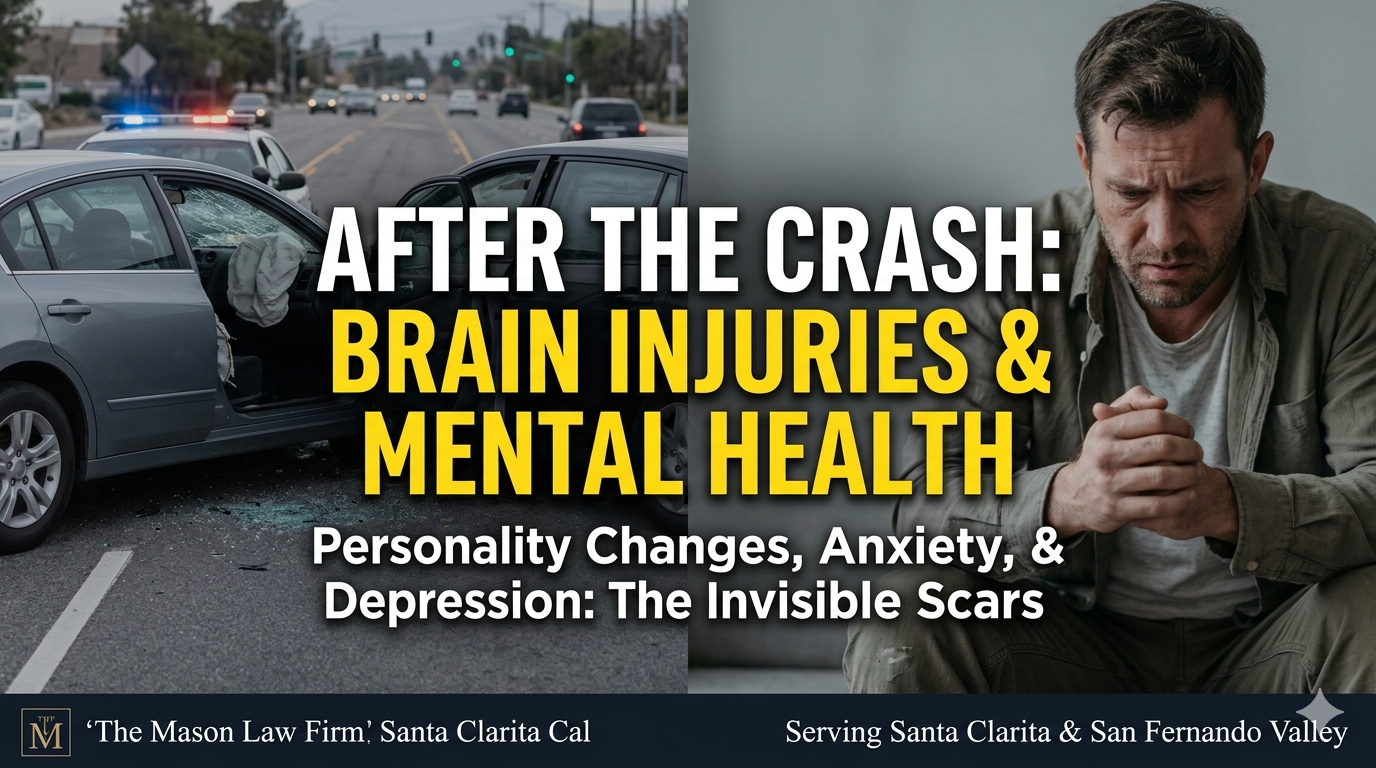
A traumatic brain injury (TBI) sustained in a car accident can have devastating effects on a person’s mental health, personality, and overall quality of life. Understanding these impacts and seeking both medical and legal help promptly is critical for victims and their families.
Car accidents are one of the leading causes of traumatic brain injuries in the United States, particularly in Santa Clarita and The San Fernando Valley. Each year, thousands of crash victims suffer head trauma ranging from mild concussions to severe brain damage, and the consequences extend far beyond physical pain.
A brain injury can fundamentally alter who a person is: how they feel, how they think, and how they interact with the world around them. If you or a loved one has experienced a head injury in a car accident, understanding the mental health implications is essential to getting the right treatment and protecting your legal rights.
If you sustain catastrophic injuries from a car accident that occurred locally, you may find helpful information on our area-specific pages:
-
👉 Valencia Car Accident Lawyer: https://www.mrscvlaw.com/valencia-personal-injury-lawyer/
-
👉 Newhall Car Accident Lawyer: https://www.mrscvlaw.com/newhall-personal-injury-lawyer/
-
👉 Saugus Car Accident Lawyer: https://www.mrscvlaw.com/saugus-personal-injury-lawyer/
-
👉 Canyon Country Car Accident Lawyer: https://www.mrscvlaw.com/canyon-county-personal-injury-attorney/
What Is a Traumatic Brain Injury (TBI)?
A traumatic brain injury occurs when a sudden blow, jolt, or penetrating injury to the head disrupts normal brain function.
In car accidents, TBIs often result from the head striking a steering wheel, window, dashboard, or headrest. They can also occur from the violent whipping motion of the head during impact. Even without a direct blow, the sheer force of a collision can cause the brain to move inside the skull, leading to bruising, bleeding, or tearing of brain tissue.
TBIs are classified as mild, moderate, or severe depending on factors such as loss of consciousness, memory disruption, and the results of imaging tests. Even a “mild” TBI, commonly referred to as a “concussion”, can have significant and lasting effects on mental health.
According to MedlinePlus, published by the National Library of Medicine, the way a brain injury manifests depends on several key factors, including:
- The age and overall health of the victim at the time of injury
- The severity and force of the blow sustained
- How much of the impact the skull was able to absorb
- The specific region of the brain that was damaged
The Connection Between Brain Injuries and Mental Health
One of the most challenging aspects of TBIs is that their effects are often invisible. Unlike a broken arm or a visible wound, changes to mental health and personality can be subtle at first — and frequently misunderstood by family members, employers, and even healthcare providers. However, the mental health consequences of a brain injury can be profoundly disruptive to everyday life.
Brain injuries affect mental health in a variety of ways, and these effects can emerge immediately following the injury or develop gradually over weeks and months. Some of the most common mental health challenges associated with TBIs include personality changes, mood disorders, anxiety, depression, and difficulties with emotional regulation.
Personality Changes After a Brain Injury
One of the most well-documented, and often most distressing, effects of a TBI is a significant change in personality. Victims who were previously calm, patient, and even-tempered may suddenly find themselves prone to outbursts of anger, impulsive behavior, or emotional volatility. This is especially common when the frontal lobe of the brain is damaged.
The frontal lobe plays a critical role in regulating impulse control, decision-making, social behavior, and emotional responses. When this region sustains damage, as frequently occurs in car accidents where the head strikes the front of the vehicle, the brain loses some of its capacity to moderate reactions. The result can be personality shifts that feel foreign to both the victim and their loved ones.
Family members often describe a TBI survivor as a “different person” following the injury. A previously patient parent may become easily angered. A normally sociable person may withdraw entirely. A reliable, professional individual may struggle to maintain composure in workplace settings. These changes are neurological in origin. They are not a choice or a character flaw but they can still cause tremendous strain on personal and professional relationships.
Loss of Emotional Control and Impulse Regulation
Among the most visible effects of frontal lobe damage is a reduced ability to control temper and manage impulsive reactions. TBI survivors may find themselves responding to minor frustrations with disproportionate anger. They may say things they would not have said before the accident, act without thinking through consequences, or struggle to filter their emotional responses in social situations.
This loss of impulse control is jarring for everyone involved. For the victim, the experience can be deeply humiliating. They may be fully aware that their reactions are out of proportion but feel powerless to stop them.
For family members and friends, witnessing these changes in someone they love is heartbreaking and confusing. Many loved ones report not knowing how to interact with the TBI survivor, leading to social isolation on both sides.
In some cases, the inability to regulate emotions leads to destructive patterns in relationships, job loss, and increasing social withdrawal, all of which further compound the victim’s mental health struggles.
Anxiety and Depression Following a Traumatic Brain Injury
Anxiety and depression are among the most prevalent mental health conditions diagnosed in TBI survivors. Research consistently shows that individuals who sustain a brain injury, even a relatively mild one, face a significantly elevated risk of developing these conditions compared to the general population.
There are two overlapping reasons for this. First, the physical damage to the brain can directly disrupt the neurochemical systems that regulate mood, including those involving serotonin, dopamine, and norepinephrine.
Second, the psychological experience of living with a brain injury, facing cognitive challenges, personality changes, physical limitations, and the uncertainty of recovery can itself trigger anxiety and depression.
Many TBI survivors experience a grief process as they mourn the person they used to be. Others develop post-traumatic stress disorder (PTSD) as a result of the accident itself, particularly if the crash involved serious injuries, fatalities, or a prolonged period of unconsciousness. Anxiety about driving again, fear of future accidents, and hypervigilance are all common symptoms that can interfere significantly with daily life.
Cognitive Challenges That Worsen Mental Health
Beyond mood and personality, TBIs frequently affect cognitive function and these cognitive difficulties can have a profound secondary impact on mental health.
Common cognitive symptoms following a brain injury include:
- Memory problems, including difficulty forming new memories or recalling recent events
- Difficulty concentrating or maintaining attention for extended periods
- Slowed processing speed and difficulty following complex conversations
- Word-finding difficulties and communication challenges
- Impaired executive function, including planning, organizing, and problem-solving
These cognitive changes can make it difficult or impossible for a TBI survivor to return to their previous occupation. They may struggle in academic settings, feel frustrated and embarrassed in social conversations, or be unable to manage daily tasks they once handled with ease. Over time, these repeated difficulties and feelings of failure can significantly worsen anxiety and depression.
How Long Do These Mental Health Effects Last?
The duration and severity of mental health effects following a TBI vary widely depending on the nature of the injury and the care the victim receives.
For some individuals, symptoms may resolve within weeks to months with proper treatment. For others, particularly those who suffered moderate to severe TBIs, the effects can be permanent and may even worsen over time without intervention.
Early and comprehensive treatment is widely recognized as the most important factor in improving outcomes for TBI survivors. This typically involves a multidisciplinary approach that includes neurological care, neuropsychological testing, psychiatric evaluation, cognitive rehabilitation therapy, and ongoing mental health support. The sooner treatment begins following the injury, the greater the likelihood of minimizing long-term impacts.
Why Prompt Medical Attention Is Critical After a Car Accident
Following any car accident involving a blow to the head or even a significant jolt, it is essential to seek medical evaluation immediately. Many TBI symptoms do not appear right away. Adrenaline, shock, and the delayed onset of swelling can mean that a victim feels relatively normal in the hours following a crash, only to develop serious symptoms days later.
Warning signs that may indicate a brain injury include persistent headaches, nausea, confusion, memory gaps, unusual fatigue, mood swings, sensitivity to light or sound, and changes in sleep patterns.
Any of these symptoms following a car accident warrant urgent medical attention. Early diagnosis not only improves medical outcomes, it also creates the documentation necessary to support a personal injury claim.
Your Legal Rights After a Brain Injury in a Car Accident
If you or a loved one sustained a traumatic brain injury in a car accident caused by another driver’s negligence, you may be entitled to significant financial compensation.
Damages available in a personal injury claim can include current and future medical expenses, rehabilitation costs, lost wages and diminished earning capacity, pain and suffering, emotional distress, and loss of quality of life.
The mental health consequences of a TBI, including personality changes, depression, anxiety, and cognitive impairment, are legitimate, compensable damages under California personal injury law. However, documenting these impacts requires prompt action, consistent medical treatment, and experienced legal representation.
Insurance companies frequently attempt to minimize or deny claims involving brain injuries, particularly when the mental health effects are not immediately visible.
An experienced personal injury attorney can help ensure that the full extent of your injuries, including the psychological toll, is properly documented and presented in your claim.
Contact The Mason Law Firm — Santa Clarita Valley Personal Injury Attorney
This article is brought to you by Mason Rashtian of The Mason Law Firm, a full-service personal injury attorney and accident lawyer serving clients throughout California and Los Angeles County, including the Santa Clarita Valley, Valencia, Stevenson Ranch, Canyon Country, Newhall, Castaic, Val Verde, and the entire San Fernando Valley.
If you or a family member has suffered a brain injury or other serious injury in a car accident, do not wait to seek legal help.
Time-sensitive deadlines apply to personal injury claims in California, and early legal action is key to preserving evidence and building a strong case.
If you or someone you love has been injured in an accident, you may be entitled to compensation for:
- Medical expenses
- Lost wages
- Pain and suffering
- Future medical care
- Permanent disability
We prepare every case as if it is going to trial and fight for full and fair compensation.
We offer free consultations and work on a contingency fee basis, meaning you pay nothing unless we win your case.
📞 Call 661-270-5677 for a free consultation.
“We Meet Our Clients by Accident!”
and
“We Put Personal in Personal Injury Law.”
Car accidents, bicycle accidents, bus accidents, motorcycle accidents, pedestrian accidents, truck accidents, slip and falls, dog bites, nursing home abuse cases, burn injuries, construction site accidents, amusement park accidents, brain injuries, spinal cord injuries, wrongful death cases, ride share accidents